The morning had started like any other Sunday—lazy, warm, filled with the simple joy of watching her daughter’s ponytail bounce as she climbed the playground ladder for the hundredth time.
Maya was five, fearless in the way only children can be, and her laughter echoed across the park like wind chimes. Her mother, Elena, sat on a nearby bench, scrolling through her phone, glancing up every few seconds to watch her daughter conquer the slide again.
Everything was ordinary. Everything was safe.
Until it wasn’t.
Elena noticed the change before Maya said a word. The way her daughter suddenly stopped at the bottom of the slide, her small hands pressing against her stomach, her face losing its color like someone had dimmed a light inside her.
“Mommy?”
Elena was on her feet before she even realized she’d moved.
“What’s wrong, baby?”
“My tummy hurts. Really bad.”
Elena knelt down, brushing hair from Maya’s forehead. She was clammy. Pale. Her eyes had that distant look children get when pain overwhelms their understanding of it.
“Did you eat something? The candy from earlier?”
Maya shook her head slowly, wincing. “No… I didn’t eat anything. A nice man gave me some juice, but I only had a little sip. It tasted weird.”
Elena’s blood turned to ice.
“What man? What juice?”
But Maya couldn’t answer. She doubled over, a small cry escaping her lips, and Elena didn’t wait for explanations. She scooped her daughter into her arms and ran.
The emergency room was a blur of fluorescent lights and hurried voices. Elena had called her husband from the car, her words tumbling out in fragments—playground, stomach pain, something’s wrong, meet me there—and he’d arrived just as Maya was wheeled into examination.
The doctors moved quickly, their initial assumption the same as Elena’s: appendicitis. Classic presentation. Right-sided pain. A surgical consult was ordered.
But when the surgeon emerged twenty minutes later, his face told a different story. He wasn’t rushing toward an operating room. He was walking slowly, deliberately, his expression carved from stone.
“Mrs. Reyes?”
Elena stood, her husband’s hand finding hers.
“It’s not appendicitis.”
Relief flickered for half a second before the surgeon’s next words extinguished it.
“There’s a toxic substance in your daughter’s bloodstream. A chemical compound. Industrial grade. This wasn’t food poisoning. This wasn’t illness.”
The room tilted. Elena gripped the chair beside her.
“That’s not possible. She was at the playground. She was just playing—”
And then she remembered.
A nice man gave me some juice.
Hospital security pulled footage from cameras near the park within the hour. The images were grainy but unmistakable: a middle-aged man sitting on a bench near the swings, a plastic bottle in his hand, offering sips to children who wandered close. He smiled. He seemed friendly. He looked like someone’s grandfather.
And then he left, dropping the bottle in a trash can as casually as if it held nothing but water.
The police recovered it thirty minutes later. The contents tested positive for a solvent used in industrial cleaning—something caustic, something that should never touch human skin, let alone a child’s lips.
Maya was lucky.
She’d only taken a small sip. The bitter taste had made her stop. Her mother had acted fast, had listened when her daughter said something was wrong, had trusted that instinct every parent prays they’ll recognize when it matters most.
By morning, the toxins had been flushed from her system. The color returned to her cheeks. She asked for apple juice—real apple juice—and Elena nearly laughed through her tears.
Two days later, police arrested a man matching the description from the footage. He’d been spotted near other playgrounds in the area, always alone, always watching. His apartment contained more bottles, more chemicals, more evidence of intent that made investigators go quiet when they spoke of it.
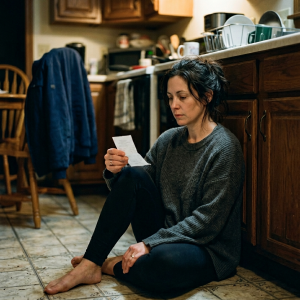
When the officer called Elena to tell her he was in custody, she sank to the floor of her kitchen and wept.
The surgeon visited Maya’s room before discharge. He stood in the doorway, watching the little girl color a picture of a butterfly, and then turned to Elena.
“You saved her life,” he said simply. “By listening. By not waiting. By trusting that she knew something was wrong even when it didn’t make sense yet.”
Elena nodded, unable to speak.
“Another twenty minutes,” he continued, “and we’d be having a very different conversation.”
That night, after the paperwork was signed and the car seat was buckled and home was finally, mercifully close, Elena glanced in the rearview mirror at her daughter.
Maya was already half-asleep, clutching a stuffed rabbit the nurses had given her.
“You did so good, baby,” Elena whispered. “You told me when something was wrong. You were so brave.”
Maya’s eyes fluttered open for just a moment.
“I knew you’d fix it, Mommy.”
And Elena drove on, gripping the steering wheel, making a silent promise to never stop listening—to the small voices, the quiet complaints, the moments when a child says something’s wrong and trusts you to believe them.
Because sometimes, that voice is the only warning you get.
Final Reflection:
Trust is a two-way street between parent and child. When we listen—really listen—to the small voices in our lives, we become their first line of defense against a world that doesn’t always protect the innocent. Sometimes love shows up not as grand gestures, but as the simple act of taking a child’s words seriously.
This article shares a personal story inspired by real-life experiences. Names and details have been changed. Always supervise children in public spaces and teach them never to accept food or drinks from strangers.