When the Titanic struck the ocean floor in 1912, it became a final resting place for over 1,500 souls. Yet, when explorers finally located the legendary wreckage 73 years later, they found a haunting, empty landscape. There were no skeletons, no skulls—only an eerie trail of personal belongings.
For decades, the absence of human remains has fueled questions. If the ship was a mass grave, where did everyone go?
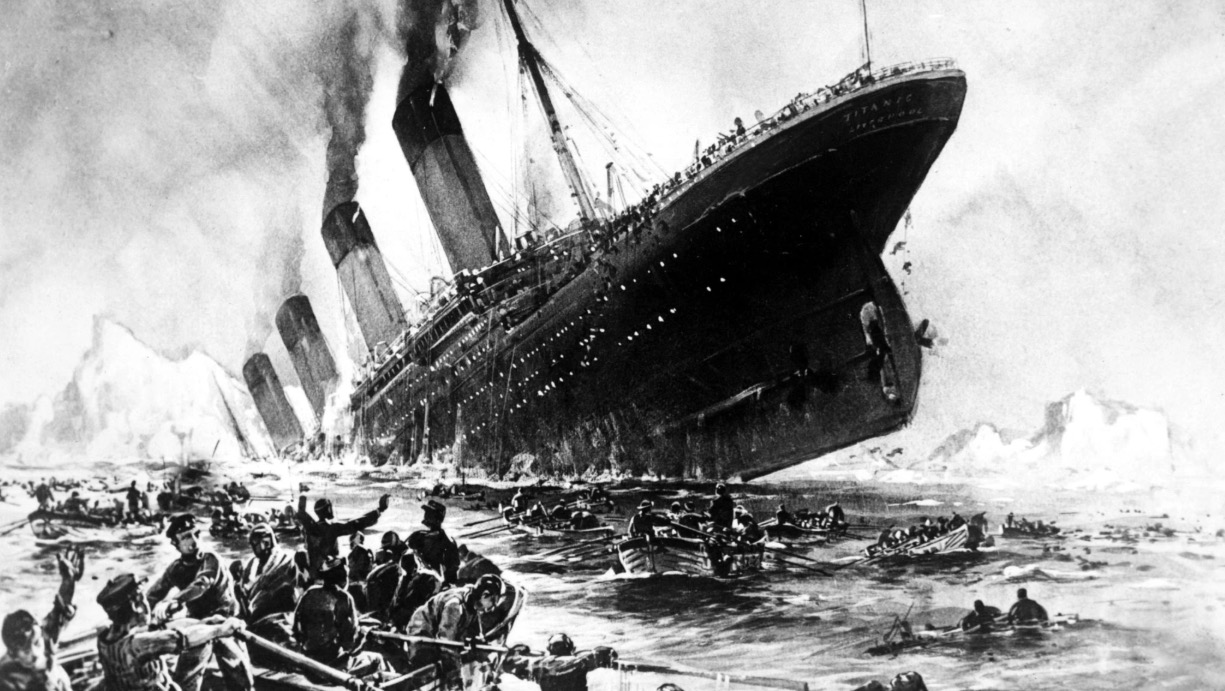
Nature’s Ultimate Recycler
The answer lies in a combination of biology and brutal ocean chemistry. After the ship sank, deep-sea scavengers—ranging from fish to microscopic organisms—quickly descended upon the wreckage. In the immediate weeks following the disaster, these creatures consumed all soft tissue, leaving behind only the skeletal remains.
However, the bones did not stay. The Titanic rests at a depth of approximately 3,800 meters. At this extreme distance below the surface, the water is what scientists call “undersaturated” with calcium carbonate. This chemical boundary, known as the Calcium Carbonate Compensation Depth (CCD), creates an environment where bones, which are largely composed of calcium, essentially dissolve over time.

A Landscape of Personal Traces
While human remains have vanished, the seabed is scattered with heartbreaking evidence of the people who perished. Explorers have repeatedly documented rows of leather shoes and boots sitting perfectly side-by-side on the silt.
“We’ve seen clothing. We’ve seen pairs of shoes, which would strongly suggest there was a body there at one point,” director James Cameron told the New York Times following his 33rd dive to the site. Experts believe these items were preserved because they were often made of tanned leather, which is more resistant to the harsh, acidic deep-sea environment than human bone.

What We Know
Over 1,200 Unaccounted For: While ships chartered by the White Star Line recovered about 330 bodies in the weeks after the sinking, the vast majority were lost to the Atlantic.
Chemical Dissolution: Below 3,000 feet, the ocean water lacks the minerals necessary to stabilize bone, causing human remains to vanish decades ago.
Scavenger Frenzy: In the early months and years, marine life ensured that no soft tissues remained on the wreckage.
Zero Remains: Multiple high-tech expeditions, including those led by Robert Ballard and James Cameron, have confirmed the total absence of skeletal remains on the ship.
Why It Still Haunts Us
The Titanic remains one of history’s most powerful tragedies, not because of what we see, but because of what is missing. The fact that the ocean has reclaimed the passengers so thoroughly serves as a stark reminder of nature’s power.
The site is no longer a macabre grave, but a solemn, silent memorial. As the hull continues to slowly decay, the ship and its passengers have become one with the deep Atlantic, leaving behind only the faint, scattered echoes of a tragedy that the world will never forget.