The 2028 presidential race hasn’t officially started. But an AI simulation is already calling a winner — and its reasoning is hard to argue with.
A video published by the YouTube channel I Ask AI fed political trends, polling dynamics, and candidate positioning into an AI model and asked it to map out the next presidential election. The result is generating serious online discussion — not because it’s guaranteed to be right, but because the logic it lays out tracks with what real political strategists are already saying quietly.
The VP Problem Nobody Wants to Talk About
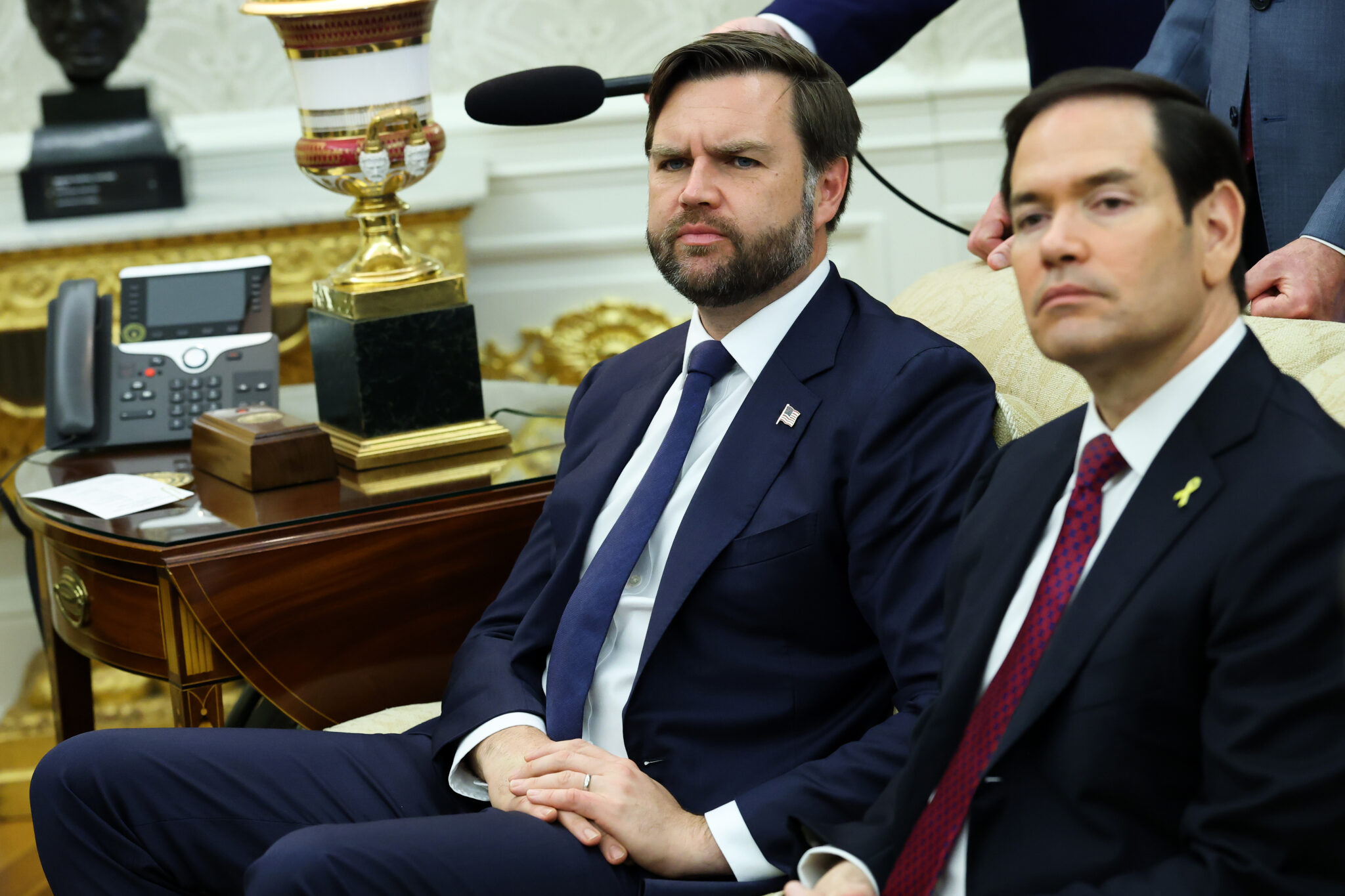
The simulation’s sharpest observation targets JD Vance directly.
“The guy standing next to Trump for four years owns every bad decision, every scandal, every economic complaint,” the AI said.
That’s the weight Vance would carry into any 2028 campaign. As Vice President, he can’t credibly distance himself from anything that happens between now and January 2029. Every policy, every controversy, every economic headline attaches to his name as much as Trump’s.
Marco Rubio, according to the simulation, sits in a more defensible position. As Secretary of State, his fingerprints are on foreign policy — not domestic upheaval.
“Rubio can credibly say he was focused on foreign policy while the domestic chaos was happening,” the model noted. “Vance can’t make that argument at all.”
Why Vance Is Still the Favorite — For Now
Despite that liability, the AI stopped short of crowning Rubio.
Vance still leads as the simulation’s current GOP frontrunner. His proximity to Trump is a double-edged sword: the same closeness that could sink him in a general election is exactly what Republican primary voters may reward.
The model’s assessment of Rubio was blunt: “Rubio won’t overtake Vance by doing anything bold. He’ll only get there if Vance stumbles.”
In other words, Rubio’s path to the nomination runs through someone else’s failure — not his own momentum.
The Trump Card Nobody Can Predict
Here’s where the simulation gets genuinely fascinating.
It doesn’t just project candidates — it models Trump’s behavior as a variable. And in one scenario, it suggests Trump himself could flip the entire primary with a single endorsement.
“When Trump sees the writing on the wall and blesses Rubio instead, the primary is over,” the AI said. “Republican voters follow Trump’s endorsement like gravity.”
Whether that scenario is realistic depends entirely on how Trump reads his own legacy by 2027. And if his second term ends on turbulent ground, a Vance nomination could look like a liability even to Trump himself.
What We Know
Here are the confirmed facts behind the speculation:
JD Vance is the sitting Vice President of the United States
Marco Rubio is the sitting Secretary of State
Gavin Newsom is the Governor of California and has been widely identified by political analysts across the spectrum as a likely 2028 Democratic contender
No official 2028 polls at meaningful scale currently exist — a gap AI simulations are actively filling in public discourse
The projections above come from an AI model run by the I Ask AI YouTube channel, not from political scientists, pollsters, or campaigns
Why This Story Hits Different Right Now
America is only a little over a year into Trump’s second term. And people are already hungry for what comes next.
That hunger isn’t apathy — it’s anxiety. For tens of millions of Americans on both sides, the 2028 election already feels like the most important one of their lifetimes. Who inherits Trump’s movement? Who runs against it? Can the country turn a page?
The AI simulation doesn’t answer those questions with certainty. What it does is give shape to something millions of people are already thinking about but don’t have the language for yet.
On the Democratic side, the model projects Newsom wins — narrowly. Its explanation is a single word that may resonate with voters across party lines: exhaustion.