Within days of each other, two catastrophic incidents shattered families and communities across America, serving as stark reminders of how fragile life can be. A luxury private jet erupting in flames on a snowy Maine runway and a wrong-way collision on a rural Georgia highway left nine people dead and countless others grappling with unimaginable loss.
Snowstorm Takeoff Turns Fatal
As winter conditions intensified at Bangor International Airport on Sunday evening, January 26, a Bombardier Challenger 600 business jet prepared for what should have been a routine departure. The aircraft had landed earlier that evening around 6:09 p.m., stopping to refuel during its journey from Houston to Paris. For over an hour, the plane sat exposed to heavy snowfall and freezing temperatures while crews performed standard de-icing procedures.
At approximately 7:45 p.m., the jet attempted takeoff. Within moments, everything went catastrophically wrong. Air traffic control recordings captured the chilling announcement: “Aircraft upside down. We have a passenger aircraft upside down.”
The jet had flipped over during takeoff and burst into flames on the runway. Emergency responders arrived within a minute, but there was nothing they could do. All six people aboard—four passengers and two crew members—perished in the inferno.
Among the victims were Tara Arnold, a respected attorney at the Houston-based personal injury firm Arnold & Itkin, and Jacob Hosmer, an experienced pilot who had recently joined the firm. Shawna Collins, a 53-year-old event planner known for her work organizing gatherings for high-profile clients, was also killed. Collins, an employee at Lakewood Church in Houston, was remembered by colleagues as someone who “had that kind of personality” that everyone loved.
The law firm’s co-founders, Kurt Arnold (Tara’s husband) and Jason Itkin, were not aboard the flight, but the loss devastated the entire organization and legal community.
A History of Ice-Related Concerns
Federal investigators from the National Transportation Safety Board arrived to examine the wreckage, and early focus has centered on weather conditions and potential ice accumulation. Aviation safety experts point out that the Bombardier Challenger 600 model has a documented history of ice-related incidents.
The aircraft model was involved in fatal crashes in Birmingham, England, and Montrose, Colorado, over two decades ago, both linked to wing ice contamination. Following these incidents, the FAA issued a directive in 2008 requiring specific cold-weather warnings in the flight manual, emphasizing that even small amounts of ice, frost, or slush on wings could cause pilots to lose control during takeoff.
Aviation consultant Jeff Guzzetti, a former NTSB investigator, explained that the plane may have been particularly vulnerable given the circumstances. After landing and sitting outside for more than an hour in freezing precipitation, ice could have quickly accumulated—especially if the aircraft was refueled with cold jet fuel stored in wing tanks, a factor cited in previous crashes.
Audio recordings reveal that pilots of other aircraft expressed concerns about conditions that evening. One pilot radioed: “The visibility has dropped… my guys are trying to make us go, I keep telling them this is stupid.” That pilot chose not to fly.
While other planes successfully took off that night, investigators stress they’re examining all possibilities, from mechanical failure to pilot decision-making to environmental factors.
A Family Destroyed on a Georgia Highway
Just days earlier, on January 14, another preventable tragedy unfolded on Highway 82 in Lee County, Georgia. Thirty-two-year-old Bernedine Spann was driving with her children—13-year-old Ja’Leah and 7-year-old Jaxton—when a vehicle traveling the wrong way crashed head-on into their Honda Accord.
Bernedine and Ja’Leah died instantly at the scene. Jaxton, critically injured, was airlifted to a hospital where he fought for his life for four days before succumbing to his injuries on January 18. The children’s father, James Spann, posted a heartbreaking message on social media: “prayers prayers prayers as Jaxton Dontrez Spann transition over to be with his mom and sister.”
Authorities identified 41-year-old Sherita Goddard as the driver of the Hyundai Tucson that struck the Spann family. According to Georgia State Patrol, Goddard was suspected of driving under the influence. She was traveling with a passenger believed to be her daughter; both were injured and hospitalized.
The tragedy left one surviving son, who was not in the vehicle, now orphaned and facing life without his mother, brother, and sister.
A Community Demands Justice
The Spann family tragedy sparked outrage and grief throughout the community. Shonda James, who described herself as Bernedine’s best friend for a decade, expressed both devastation and fury.
“She needs to be held accountable to the full extent,” James said. “She killed people—they did not have to die. It was negligent… she made a conscious decision to get behind the wheel with children in her car and drive on the wrong side of the road.”
Ja’Leah was an eighth-grader at Randolph County Middle School, while Jaxton attended elementary school as a second-grader. School officials made counseling services available to students and staff struggling to process the loss. Family members remembered Bernedine as someone who “would love everyone” regardless of who they were, and described Ja’Leah as having the same infectious personality that could brighten any room.
A GoFundMe campaign established for funeral and medical expenses has raised nearly $30,000 as the community rallies around the surviving family members.
The Long Road to Answers
As investigations continue in both Maine and Georgia, families await answers that may take months or even years to materialize. The NTSB’s preliminary report on the Maine crash is expected within 30 days, but the final determination could take over a year. Investigators are examining flight data recorders, pilot backgrounds, aircraft maintenance records, weather conditions, and all available evidence.
In Georgia, authorities have not yet announced what charges Goddard will face, though the suspected DUI causing multiple fatalities will likely result in serious criminal prosecution.
These twin tragedies underscore how suddenly lives can be shattered—whether by weather-related aviation risks or the reckless decision to drive impaired. As communities in Maine and Georgia mourn, they also seek accountability and answers that might prevent future families from experiencing such devastating losses.
The investigations continue, but for those left behind, no explanation will fill the void or bring back their loved ones. What remains is the painful task of honoring those who died and ensuring their deaths were not in vain.
Related Posts
Eyewitness Account Challenges Federal Narrative in Fatal Minneapolis Shooting of ICU Nurse
Key witness testimony reveals Alex Pretti intervened to protect fallen protester before Border Patrol agents fired ten shots in under five seconds In a sworn declaration that…

When the Weatherman’s Final Forecast Turned Tragic: The Story Behind Roland Steadham’s Fatal Flight
The morning of January 27, 2026, began like countless others for Roland Steadham—with aviation on his mind and Idaho’s winter skies beckoning. At 10:43 a.m., the veteran…

Hello, my name is Marcus Chen. I’m twenty-three years old, working two jobs, and finishing my engineering degree at a community college in Sacramento. I live in a small apartment above a Korean barbecue restaurant where the smell of grilled meat seeps through the floorboards every evening, and the neon signs from the street below paint red and blue patterns on my ceiling at night.
Hello, my name is Marcus Chen. I’m twenty-three years old, working two jobs, and finishing my engineering degree at a community college in Sacramento. I live in…

From Silenced Survivor to Powerful Advocate: The Untold Story Behind Paris Hilton’s Mission
What if the world’s most famous party girl was hiding one of the darkest secrets in American youth treatment? The truth about Paris Hilton’s transformation from reality…
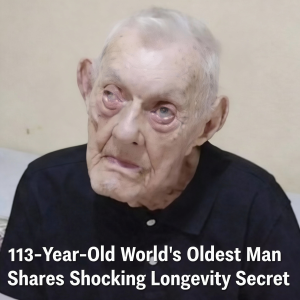
The 113-Year-Old’s Secret to Longevity That Modern Science Now Confirms
What if the fountain of youth isn’t hidden in expensive supplements, biohacking protocols, or cutting-edge medical treatments—but in something as simple as the people around you? João…

Ever Wondered About That Mysterious White String in Your Eggs? Here’s Why You Should Actually Be Happy to See It
You crack open an egg for your morning scramble, and there it is again—that peculiar white, rope-like strand clinging to the yolk. If you’re like most people,…