When nurses in Székesfehérvár, Hungary, delivered baby Bence, the delivery room fell completely silent. The healthy newborn entered the world with a thick, striking crown of pure, snowy-white hair.
He weighed nearly 12 pounds at birth. He arrived on his exact due date, robust and crying vigorously. Yet his shimmering, silver mane immediately stopped hospital staff in their tracks.
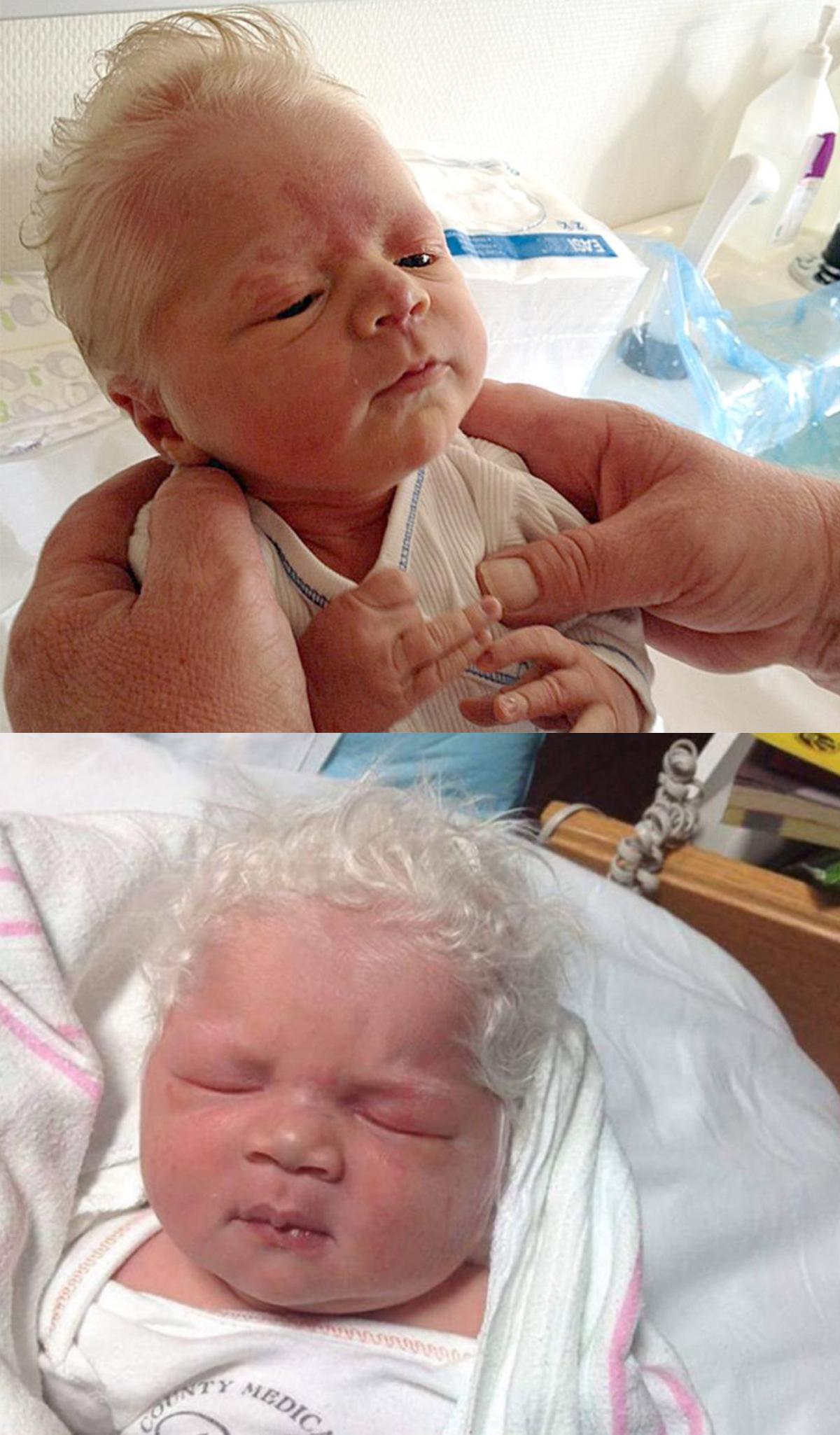
Nurses quickly fell in love with his unique look, affectionately nicknaming him “Prince Charming.” But beneath the initial awe, medical staff acted immediately to ensure the infant faced no underlying danger.
The Rush for Medical Answers
Doctors initially wondered if the infant suffered from albinism. Albinism is an inherited condition where the body cannot produce sufficient melanin. The condition often affects eyesight and makes skin extremely vulnerable to sun damage.
Attending physician Dr. Zoltán Kummer ordered comprehensive blood tests and physical evaluations. Specialists sent samples to Budapest laboratories to examine his metabolic markers and pigment cells.
The results brought an immediate sigh of relief to his parents.
“Bence is not an albino,” Dr. Kummer confirmed to Hungarian news outlets. “In that case, melanin pigment would be missing from his skin and his iris as well.”
The infant possessed healthy, normal skin tone and dark eyes. His silver hair stemmed from a localized, temporary pigment shortage. Experts noted his pigment cells would likely activate as he grew older, naturally darkening his locks over time.
What We Know
The Infant: Bence was born healthy at 5,400 grams and 54 cm in Székesfehérvár, Hungary.
The Diagnosis: Physicians ruled out albinism, prenatal stress, and genetic illness through comprehensive testing.
The Cause: Pediatricians diagnosed an isolated, temporary melanin deficiency confined solely to his hair follicles.
The Prognosis: Medical specialists confirmed the condition is completely harmless and often resolves naturally during early childhood development.
Why This Matters
For millions of parents across the country, newborn anomalies trigger instant fear and anxiety. Rare physical traits often prompt intrusive medical worries or social misunderstandings.
Bence’s case highlights how extraordinary human genetics can be without signaling an underlying disorder. Melanin development in infants does not always follow a standard timeline. Many newborns experience shifts in hair color and eye pigmentation as melanocytes mature during early development.
His story offers reassuring proof that rare physical quirks can simply be benign wonders of biology.
Today, Bence remains a healthy child whose early viral fame reminded families everywhere to celebrate individuality and trust clinical science over fear.