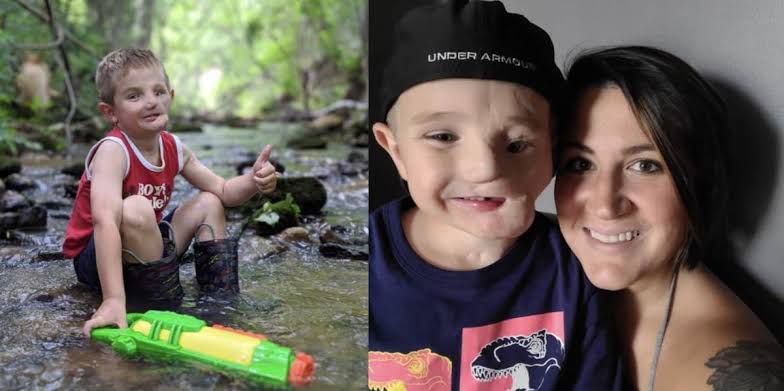
A North Carolina boy who miraculously survived a near-fatal dog attack as a toddler now faces a different kind of pain in public settings.
At just 21 months old, Ryder Wells was visiting family for Thanksgiving in 2015 when two 100-pound Rottweilers attacked him. The brutal assault left the toddler fighting for his life in intensive care.
Ryder suffered catastrophic injuries. The attack tore away half of his face, crushed his teeth, fractured his arm, and punctured his lung. Medical staff initially warned his family that survival was unlikely.
Against all odds, the young boy made it through emergency care. Over the following years, surgeons performed roughly 50 complex procedures to reconstruct his face and airways.
Facing Public Cruelty
While Ryder proved his physical strength, returning to everyday public life presented unexpected emotional challenges.
According to his mother, Brittany Wells, strangers frequently stare, point, or make unkind remarks when they see her son. In one incident at a local park, a child pointed at Ryder, yelled “monster,” and ran away. During a grocery trip, a shopper vocalized disgust directly within earshot.
“It breaks my heart as a parent,” Brittany told reporters, adding that people often judge before understanding what the young boy survived.
To shield himself from public stares, Ryder often wears a baseball cap or lowers his head. His mother consistently reinforces positive self-worth at home, reminding him every day that being different is beautiful.
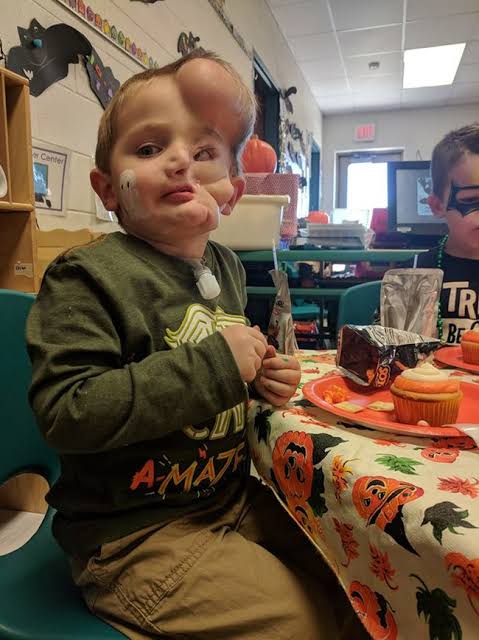
What We Know
The Incident: Two 100-pound Rottweilers attacked 21-month-old Ryder Wells during Thanksgiving 2015 in North Carolina.
Medical Recovery: Ryder survived a punctured lung, crushed facial structure, broken bones, and underwent 50 reconstructive surgeries.
Current Situation: Now school-aged, Ryder faces public stigma, pointing, and unkind remarks regarding his facial appearance.
Family Advocacy: His mother, Brittany Wells, uses his story to raise awareness about facial differences and combat bullying.
Why This Matters
Ryder’s story highlights a broader issue faced by millions of children living with visible scars or facial differences: the impact of public reaction on recovery. Medical experts emphasize that social acceptance is a crucial component of healing for trauma survivors. Teaching children and adults empathy toward physical differences helps build safer, more compassionate communities for young survivors who have already overcome immense physical hurdles.
“He is such a fighter, and he doesn’t let anything hold him back,” Brittany said, holding onto hope that sharing Ryder’s story will encourage people to lead with kindness.