The gold medal favourite from New Zealand was stretchered away from the slope after a devastating fall during qualifying, leaving viewers and commentators stunned
The 2026 Milan-Cortina Winter Olympics has already delivered its share of heart-stopping moments, but nothing quite prepared fans for what unfolded in the men’s freestyle skiing halfpipe qualifiers on February 21st. Finley Melville Ives, New Zealand’s reigning world champion and one of the most anticipated athletes of the Games, suffered a harrowing crash that brought the event to a standstill — and prompted BBC producers to cut their live broadcast feed almost immediately.
A Giant Shadow Over the Halfpipe
Coming into the qualifiers, Melville Ives carried the weight of enormous expectation. The 22-year-old had earned the title of world champion through a combination of technical precision and jaw-dropping aerial innovation, making him the athlete most tipped to step onto the Olympic podium. Spectators packed the halfpipe venue to witness what many hoped would be a defining performance in Olympic history.
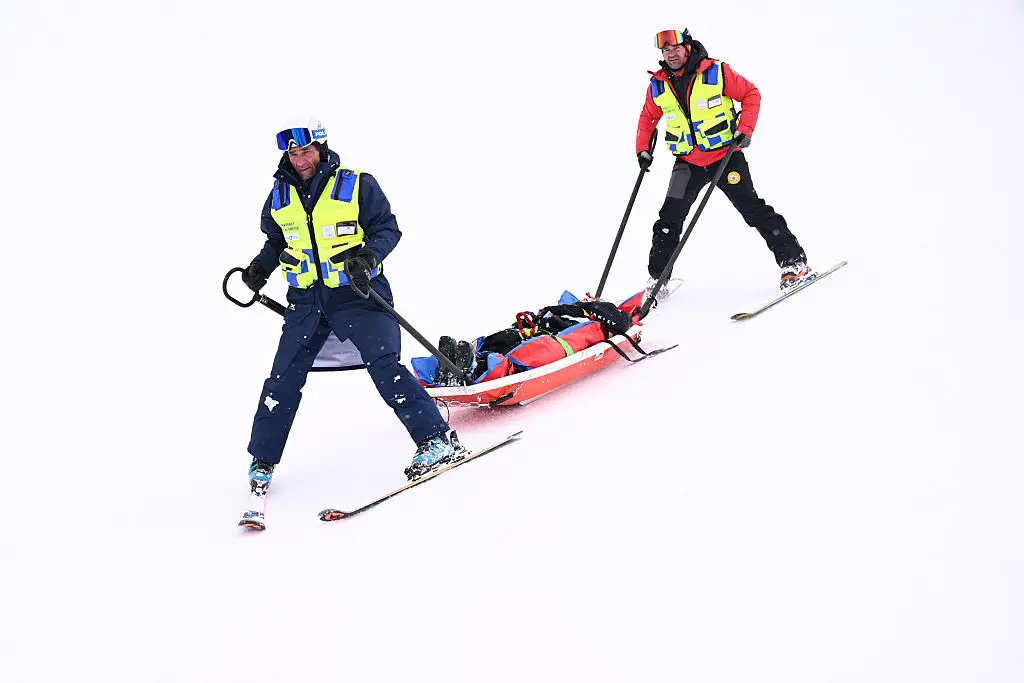
That dream came undone in painful fashion. After a fall on his first qualifying run, Melville Ives needed a strong second attempt to guarantee his place in the final. He launched into a high-amplitude jump above the pipe — the kind of move that has made him a fan favourite worldwide — but his legs failed him on the descent. He collapsed heavily on the snow, unable to complete the landing, and emergency medical personnel were on the slope within seconds.
BBC Reacts, Commentators Left Speechless
The BBC, broadcasting the event live to millions of viewers across the United Kingdom, made the immediate decision to cut away from the crash scene, sparing audiences from witnessing the full extent of the medical response. The move drew praise from viewers who recognised the broadcaster’s sensitivity in a distressing moment.
On air, the commentary team struggled to process what they had just seen. “Oh, no, no, no. You don’t want to see a final where you don’t have everyone there,” one commentator said, the emotion evident in his voice. His colleague described it as “a heartbreaking moment for halfpipe skiing in 2026,” adding that fans had been eagerly anticipating Melville Ives raising the competitive bar for the entire field.
“They are pushing the limits,” the lead commentator reflected, “the fine line between crashing out and putting down a perfect run.”
Team New Zealand Provides Update
Following a tense period of uncertainty, Team New Zealand moved quickly to reassure the public. In an official statement shared across social media, the team confirmed that Melville Ives had sustained a heavy knock but remained conscious and alert. “Fin is with his family and being assessed by medical professionals,” the statement read. “He is stable and positive. Thanks for the love.”
The skier was stretchered from the slope and transported for further evaluation, but the initial signs — that he was talking to his mother and responding positively — brought considerable relief to the global ski community.
A Games Defined by Courage and Risk
The crash serves as a sobering reminder of the physical dangers inherent in elite winter sports. The 2026 Games have not been without their share of injury drama. American skiing legend Lindsey Vonn also suffered a devastating setback during the competition, sustaining a complex tibia fracture that required surgery and the insertion of metal plates — what she herself has referred to as her “bionic leg.” Remarkably, Vonn had entered the Games already managing an ACL tear suffered just days prior, a testament to the extraordinary determination of Winter Olympic athletes.
Melville Ives joins a growing list of competitors who have paid a physical price at these Games, though the extent of his injuries remains to be confirmed as medical assessments continue.
The halfpipe final proceeded without its biggest star, casting a noticeable shadow over what should have been one of the most exciting events of the entire Winter Olympics. For fans of freeski halfpipe, the absence of the world champion from the medal rounds is a loss that transcends competition results.
The ski community now holds its collective breath, hoping for a full recovery that will one day return Finley Melville Ives to the slopes where he has so often made the world stop and stare.
Get well soon, Fin. The halfpipe will be waiting.