Hello, my name is Marcus Chen. I’m twenty-three years old, working two jobs, and finishing my engineering degree at a community college in Sacramento. I live in a small apartment above a Korean barbecue restaurant where the smell of grilled meat seeps through the floorboards every evening, and the neon signs from the street below paint red and blue patterns on my ceiling at night.
This wasn’t the path I imagined for myself. But it’s the path where I finally learned the difference between family and blood.
Three years ago, I was eighteen and about to start at UC Berkeley—full scholarship, engineering program, the whole dream. My parents, Helen and David Chen, were typical Silicon Valley strivers. They had a nice house in Cupertino, drove matching Teslas, and posted constantly about their philanthropic work with underprivileged youth. The irony wasn’t lost on me later.
My uncle Raymond—my dad’s younger brother—was different. He never married, never climbed the corporate ladder. Instead, he spent thirty years restoring classic cars in a warehouse in Oakland. His collection was legendary among enthusiasts: a 1967 Shelby GT500, a 1970 Plymouth Hemi ‘Cuda, a pristine 1963 Corvette Sting Ray. Each one worth a small fortune. Each one more important to him than money could measure.
When I got into Berkeley, Uncle Raymond called me with news that made me cry. He’d sold his entire collection—every single car—to set up a trust fund for my education. $180,000. He said, “Your brain is worth more than any engine I’ll ever rebuild, Marcus. Make something beautiful with it.”
I was speechless. Grateful. Overwhelmed.
My parents smiled when I told them, but their smiles didn’t reach their eyes.
Move-in day arrived. The Berkeley campus buzzed with excited freshmen and their families hauling mini-fridges and crates of textbooks. I remember the smell of fresh-cut grass and the sound of parents taking photos, capturing their kids’ first steps into independence.
Uncle Raymond drove us in his last remaining vehicle—a beat-up pickup truck he used for parts runs. My parents followed in their Model X, trunk loaded with the dorm supplies we’d bought together.
We were standing in the parking lot outside my assigned dorm when my mom pulled me aside. She handed me an envelope. Inside was a check for $2,000.
“This is all we can afford to give you for the semester,” she said, her voice flat and rehearsed. “You’ll need to figure out the rest.”
I stared at the check. “But… Uncle Raymond’s fund? The $180,000?”
My dad cleared his throat. “That money went into an investment opportunity. Very promising. We’ll see returns in a few years, and then—”
“You took his money.” My voice came out hollow.
“We’re managing it responsibly,” my mom said, her tone defensive. “You’re young. You don’t understand how wealth building works.”
I looked at Uncle Raymond. His face had gone completely still, but his hands were clenched at his sides. My dad wouldn’t meet his eyes. Neither would my mom.
That’s when I understood. They’d taken the money meant for my education and used it for themselves. Probably the down payment on a Tahoe vacation home they’d been hinting about. Or Dad’s cryptocurrency venture he wouldn’t shut up about.
The parking lot suddenly felt too small. Too loud. Everything too bright.
I handed the check back to my mother. “Keep it.”
“Marcus, don’t be dramatic—”
“I’m not being dramatic. I’m being clear.” I turned to my uncle. “Can I stay with you?”
Uncle Raymond’s eyes went shiny. He nodded once, sharp and quick. “Yeah, kid. Yeah, you can.”
My parents sputtered protests, threats about cutting me off, lectures about gratitude and disrespect. But their words bounced off me like rain off glass. I grabbed my duffle bag from their trunk, and Uncle Raymond and I drove away while they stood there in the parking lot, looking exactly like what they were: people who’d been caught.
The next six months were hard. I withdrew from Berkeley, applied to community college, and started working at a hardware store and tutoring high school kids in math. Uncle Raymond never asked me for rent. He just kept the fridge stocked and asked how my classes were going.
I didn’t speak to my parents. They tried calling for the first month, then gave up.
Uncle Raymond, meanwhile, started having dizzy spells. At first, he brushed them off. But after he nearly passed out while welding, I dragged him to the doctor.
Stage 3 kidney disease. He’d need dialysis soon. Maybe a transplant eventually.
The medical bills started piling up. His insurance covered some, but not enough. I picked up a third weekend gig doing delivery driving. Uncle Raymond told me to stop, that he’d figure it out, but I refused.
Then, one evening, there was a knock at our door.
I opened it to find my parents standing there with Target gift bags and guilty smiles.
“We wanted to check in,” my mom said. “See how you’re doing.”
My dad’s eyes flicked past me, scanning the apartment. “Is Raymond home?”
Before I could answer, a woman appeared beside me in the doorway. Dr. Patricia Okafor, my uncle’s nephrologist. She’d stopped by to drop off some updated medication information and had ended up staying for dinner.
My parents’ faces drained of color.
“Who is this?” my mom asked, her voice tight.
Dr. Okafor extended her hand professionally. “I’m Raymond’s kidney specialist. You must be family?”
The silence that followed was exquisite.
See, my parents had assumed Uncle Raymond was alone and struggling. They’d probably come to swoop in, play the heroes, maybe even guilt me into coming home. But seeing a confident, well-dressed doctor standing in our kitchen—someone clearly involved in Uncle Raymond’s care—shattered whatever narrative they’d constructed.
What they didn’t know was even better.
Dr. Okafor had introduced us to a patient advocacy nonprofit that helped cover Uncle Raymond’s treatment costs. I’d also discovered that I was a kidney match for my uncle—something we’d learned during routine testing. The transplant was scheduled for three months out.
But more than that: I’d filed a civil complaint against my parents for misappropriation of funds from Uncle Raymond’s trust. The legal process was slow, but our lawyer was confident. The money would come back, with interest.
My parents stood on that doorstep, realizing too late that they’d underestimated both of us.
“We should go,” my dad finally mumbled.
They left their Target bags in the hallway. I donated them to Goodwill the next morning.
Uncle Raymond and I never got his car collection back. But I realized something important: he’d already given me something better. He taught me that real family isn’t about shared DNA or obligation. It’s about showing up. It’s about sacrifice that doesn’t come with strings attached.
Six months ago, I gave my uncle my kidney. Recovery was tough, but we got through it together.
Last week, I got my acceptance letter to transfer to Berkeley’s engineering program for next fall. This time, I’m paying my own way with scholarships, grants, and the settlement money we finally recovered.
My parents sent a congratulations card. I sent it back unopened.
Some bridges aren’t worth rebuilding. And that’s okay.
Related Posts
He Kept a Money Jar for Six Days. Then He Told Me Who Took His Sister
The first thing I noticed was the coins. Nickels, mostly. A few crumpled ones. My son Theo had started hiding a mason jar under his bed, and…
The Signal at Gate 14
Officer Renata Ford had worked airport security for six years, long enough to develop an instinct for the wrongness that doesn’t show up on any scanner. It…
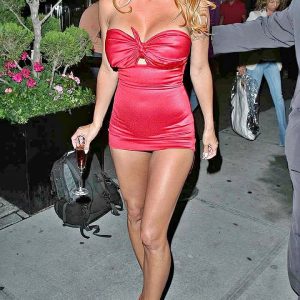
She Stopped Wearing Makeup. Hollywood Started Paying Attention Again
She Stopped Wearing Makeup. Hollywood Started Paying Attention Again. Pamela Anderson walked into Paris Fashion Week in September 2023 wearing nothing on her face. No foundation, no…
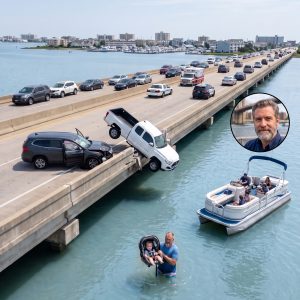
A toddler was thrown off a bridge into the bay during a 5-car crash.
A toddler was thrown off a bridge into the bay during a 5-car crash. A stranger jumped 30 feet after her. It happened May 2, 2021 on…
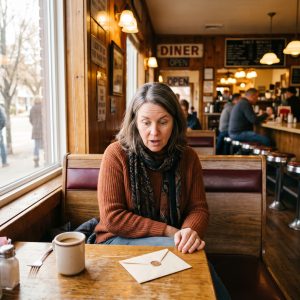
When My Widowed Father Kept Taking Women to the Same Restaurant, I Thought I Understood Grief. I Didn’t.
My mother died two years ago. My father, Daniel, was sixty-one, and for the first year he barely left the house except for groceries and the occasional…
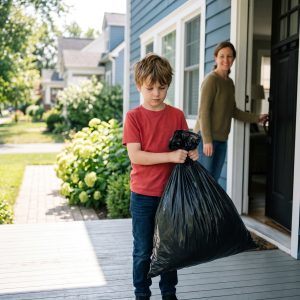
After four long years of home visits, interviews, and endless waiting, our son finally arrived. Ethan was seven, small for his age, with serious brown eyes.
After four long years of home visits, interviews, and endless waiting, our son finally arrived. Ethan was seven, small for his age, with serious brown eyes. It…