Have you ever caught sight of small, shadowy specks floating through your field of vision—perhaps while gazing at a cloudless sky or staring at a blank wall? If so, you’ve experienced what doctors call eye floaters. While these drifting shapes can be startling when you first notice them, they’re typically nothing to worry about. Still, knowing what triggers them and when they might signal something more serious is essential for protecting your eyesight.
Eye floaters show up as dark or grayish spots, wiggly lines, or delicate strands that seem to swim across what you’re looking at. They follow your eye movements with a slight delay and become especially noticeable when you’re looking at something plain and well-lit. What’s actually happening inside your eye is fascinating: the main culprit is usually the natural aging of the vitreous humor—that clear, gel-like material filling the interior of your eyeball.
Over time, this gel begins to contract and become more liquid. When it does, tiny fibers within it can bunch together, creating small clumps that cast shadows onto your retina. That’s what you’re seeing when floaters appear. Beyond age-related changes, floaters can also result from the vitreous pulling away from the back of the eye (called posterior vitreous detachment), tears in the retina, inflammation inside the eye, bleeding, or even as side effects from certain eye procedures or medications.
The vast majority of floaters are completely harmless, but there are times when they demand urgent medical attention. If you suddenly see a shower of new floaters, experience bright flashes resembling lightning, lose part of your visual field, or feel pain in your eye, don’t wait—get help immediately. These warning signs could point to something as serious as a detached retina.
When you visit an eye specialist about floaters, they’ll typically perform a dilated eye examination to get a thorough look inside. They might also use ocular ultrasound or optical coherence tomography (OCT) imaging to check for any underlying problems. In most situations, treatment isn’t required—your brain gradually learns to tune out the floaters, making them less bothersome with time.
For cases where floaters significantly interfere with vision, surgical options exist. A vitrectomy removes the vitreous gel and replaces it with a clear solution, while laser therapy breaks up the floaters. Both procedures come with potential complications, so they’re reserved for truly disruptive cases. Maintaining your eye health through routine checkups and healthy lifestyle choices remains your best defense.
The bottom line? Eye floaters are usually just a harmless part of how our eyes change over time. But any sudden or dramatic shift in your vision deserves immediate professional evaluation. When it comes to your eyes, it’s always better to be safe and let a qualified eye care provider assess what’s happening.
Related Posts

It was a quiet October evening at Lake Marren, and the air smelled like wet leaves.
It was a quiet October evening at Lake Marren, and the air smelled like wet leaves. I had been Eli’s nanny for five years, ever since his…

When my younger sister Priya called me in tears after her lease fell through, I didn’t think twice.
When my younger sister Priya called me in tears after her lease fell through, I didn’t think twice. “Stay with us until you’re back on your feet,”…
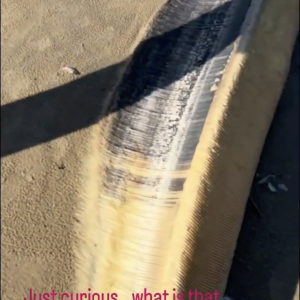
Beachgoers Spotted This Strange Object in the Sand — And the Comments Had an Unexpected Answer
At first glance, it looks like nothing more than a strange piece of material lying on the beach. But after someone filmed it and asked, “What is…

The Gilded Pedestal: When Dignity Mattered More Than Prestige
The invitation had arrived three weeks prior, encased in heavy parchment embossed with metallic gold lettering. It spoke of legacy, generosity, and an exclusive evening dedicated to…
Seconds From Disaster: The “Tiger Attack” That Wasn’t What It Seemed
A child’s scream. A sudden burst of movement. And a moment that looked terrifyingly real. A viral video appeared to show a tiger rushing toward a young…

A Strange Growth on a Pear Tree Has People Doing a Double Take
At first glance, it looks like something from a horror movie. A homeowner recently spotted an unusual red, fleshy-looking growth attached to a leaf on a pear…